


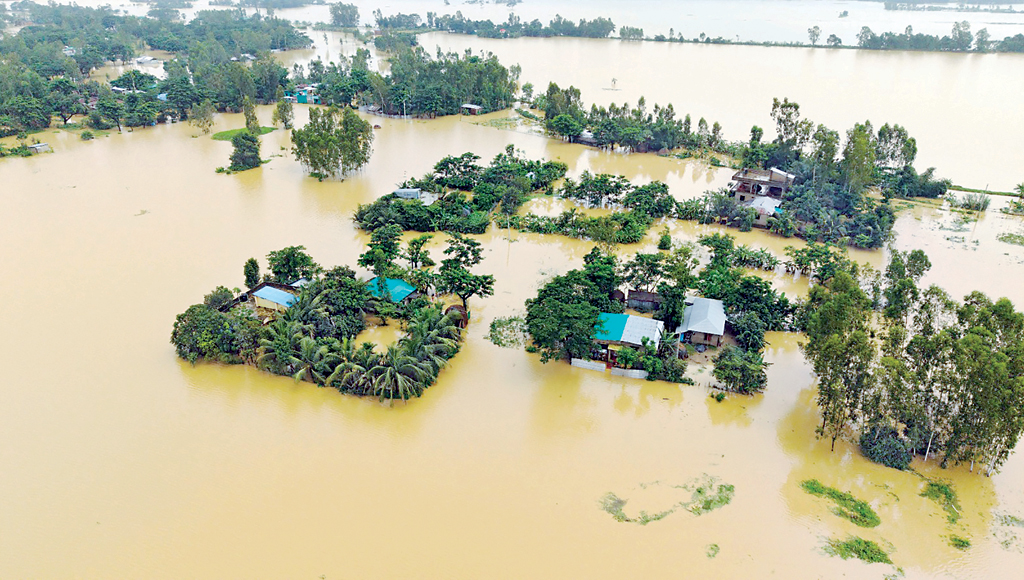
Bangladesh could see 1.33 crore people become internal climate migrants by 2050 because of the combined effects of sea-level rise, water scarcity and agricultural decline, according to the Asian Development Bank’s Asia-Pacific Climate Report 2026.
The report says people facing the greatest coastal flood risk in Bangladesh, Myanmar and India are often poorer than their coastal neighbours, leaving them with fewer resources to prepare, cope and recover.
Across 30 coastal economies in Asia and the Pacific, annual coastal flood damage could rise from about $27 billion today to $172 billion–$199 billion by 2050 and $520 billion–$739 billion by 2100 without adaptation.
The regional projections vary by emissions scenario and do not provide a Bangladesh-specific estimate of future flood damage.
The report cites Bangladesh’s roughly 5,000 multipurpose cyclone shelters, early-warning and evacuation systems as measures that help communities adapt to coastal hazards.
It estimates that annual regional investment of $9 billion–$19 billion in coastal protection could avoid $178 billion–$360 billion in flood damage, producing benefits of up to 20 times the investment cost.
The report also identifies the Bangladesh Delta Plan 2100 as a framework linking water, agriculture, livelihoods, ecosystems and phased investment across regional hotspots.