


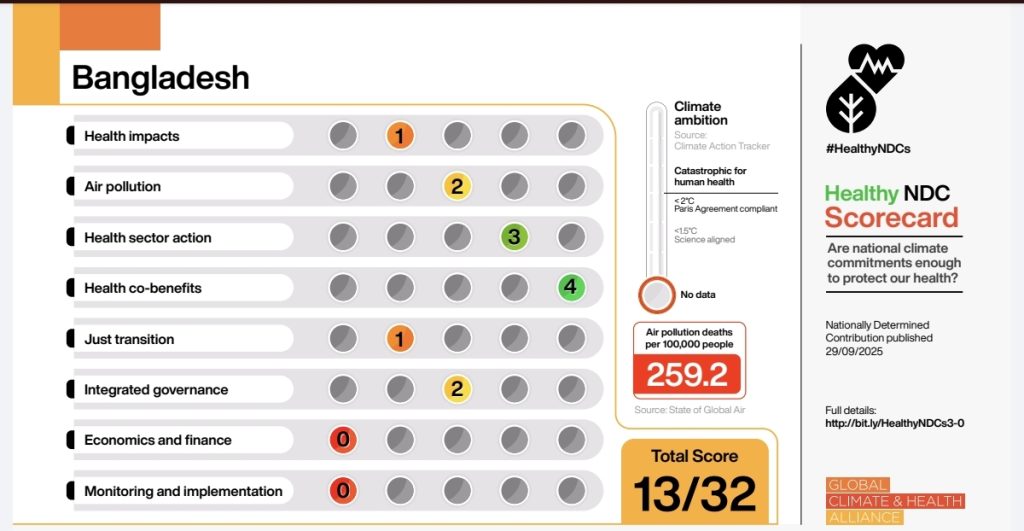
Bangladesh has scored 13 out of 32 in a global assessment of countries’ efforts to integrate health into climate action, receiving zero points for economics and finance, and monitoring and implementation.
The findings were published on Monday in the 2026 Healthy Nationally Determined Contributions scorecard by the Global Climate and Health Alliance, which assessed 117 national climate plans covering 132 countries across eight categories.
The zero scores in financing and implementation monitoring highlight gaps in the provisions assessed for funding climate commitments and tracking progress, according to the scorecard.
However, Bangladesh received full marks, four out of four, for recognising the health benefits of climate action and scored three out of four for measures in the health sector.
It received two points each for air pollution and integrated governance, and one point each for health impacts and just transition.
Under the Paris Agreement, countries submit nationally determined contributions [NDCs] outlining their climate action plans.
Bangladesh’s NDC recognises the right to health and a clean, healthy and sustainable environment, while calling for stronger coordination across sectors.
The country’s commitments include strengthening climate-resilient health systems, improving disease outbreak advisories, developing climate-resilient health facilities and incorporating climate and health issues into medical education and workforce training.
Air pollution remains a major health concern in Bangladesh.
The scorecard cites 259.2 air pollution deaths per 100,000 people, drawing on data from the State of Global Air.
‘Governments must grasp that air quality action is a vital part of effective climate action, and that people’s health and lives are at stake with both,’ said GCHA executive director Jeni Miller.
Colombia topped the assessment with 29 points, followed by Nigeria with 25 and Cambodia with 24.
Bangladesh shared a score of 13 with South Africa, while the European Union scored 12 and Indonesia 11.