


Japan has projected private-sector investment of up to 1 trillion yen or $6.33 billion in Bangladesh over the next five years, with the investment expected to create 200,000 jobs.
The two leaders also welcomed a 50 billion yen [$3.16 billion] emergency support loan to strengthen Bangladesh’s economic resilience and ensure a stable energy supply amid volatility in global energy markets.
The loan is the first yen-loan project under Japan’s Partnership on Wide Energy and Resources Resilience Asia initiative.
The developments come as the two countries agreed to upgrade their flagship development initiative into a broader partnership covering industrial growth, energy security, regional connectivity and defence cooperation.
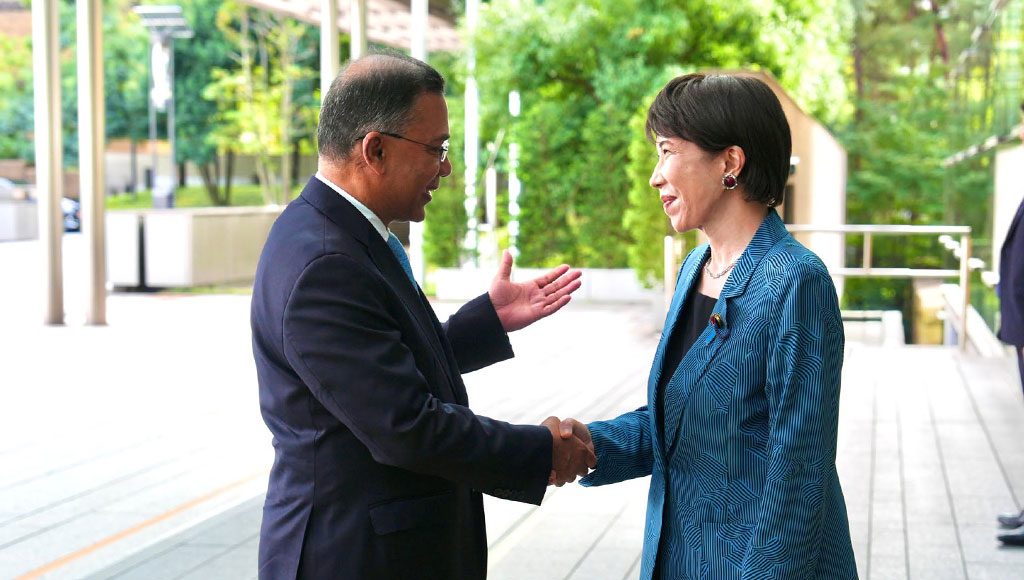
The projection was announced in a joint statement issued after prime minister Tarique Rahman’s summit with Japanese prime minister Sanae Takaichi in Tokyo on Tuesday, the second day of Tarique Rahman’s four-day visit to the east Asian nation.
The two countries agreed to upgrade their flagship Bay of Bengal Industrial Growth Belt (BIG-B) initiative to ‘BIG-B for Shared Prosperity’, aiming to integrate power, energy, deep-sea port, industrial and information and communication technology infrastructure to develop industrial value chains and strengthen trade and supply links.
Under the upgraded initiative, Bangladesh and Japan will work to develop the Matarbari-Maheshkhali area into a major logistics, energy and industrial hub centred on the Matarbari deep-sea port.
The leaders also agreed to advance regional connectivity, including preparatory work for the early operation of the third terminal at Hazrat Shahjalal International Airport in Dhaka and efforts to move forward with the construction of Dhaka’s mass rapid transit lines.
They also agreed to discuss future cooperation on the operation and management of Matarbari port.
The joint statement said the upgraded BIG-B initiative would address growing supply-chain risks, technological changes and social challenges while strengthening economic resilience.
Tarique Rahman and Sanae Takaichi welcomed major investments expected to be announced during the visit and agreed to work towards more resilient supply chains in manufacturing, food and agriculture, ICT and pharmaceuticals.
They emphasised the need to improve Bangladesh’s investment environment through greater transparency and predictability in taxation, customs clearance, remittances and licensing.
The two sides also welcomed agreements to expand cooperation in agriculture, fisheries and livestock, along with a yen-loan project to improve the investment environment.
The leaders reaffirmed their commitment to bringing the Japan-Bangladesh Economic Partnership Agreement into force early to boost trade and investment and support Bangladesh’s sustainable transition from least developed country status.
Japan also expressed its expectation for further discussions on Bangladesh’s request to join the Regional Comprehensive Economic Partnership.
Defence cooperation
The two leaders agreed to deepen defence and security cooperation amid an increasingly uncertain geopolitical environment.
They welcomed the signing and entry into force of an agreement on the transfer of defence equipment and technology, while discussing a review of Japan’s three principles on the transfer of defence equipment and expressed expectations for further progress in bilateral cooperation.
Japan said it would deepen cooperation with Bangladesh in areas contributing to regional peace and stability, including maritime awareness, coastal patrol and port security.
The two leaders welcomed the provision of a patrol vessel through Japanese official development assistance to strengthen Bangladesh’s coastal security capabilities.
They also welcomed the provision of five patrol boats under Japan’s Official Security Assistance programme and agreed to explore further cooperation under the programme.
On regional issues, the two leaders called for an end to violence in Myanmar and a conducive environment for humanitarian assistance and dialogue.
They said the ultimate solution to the Rohingya crisis was the voluntary, safe, dignified and sustainable return of displaced people, including the Rohingyas, to Myanmar.
The two prime ministers reaffirmed their commitment to a free and open Indo-Pacific based on the rule of law, and to cooperation on international peace, security and multilateral institutions.