


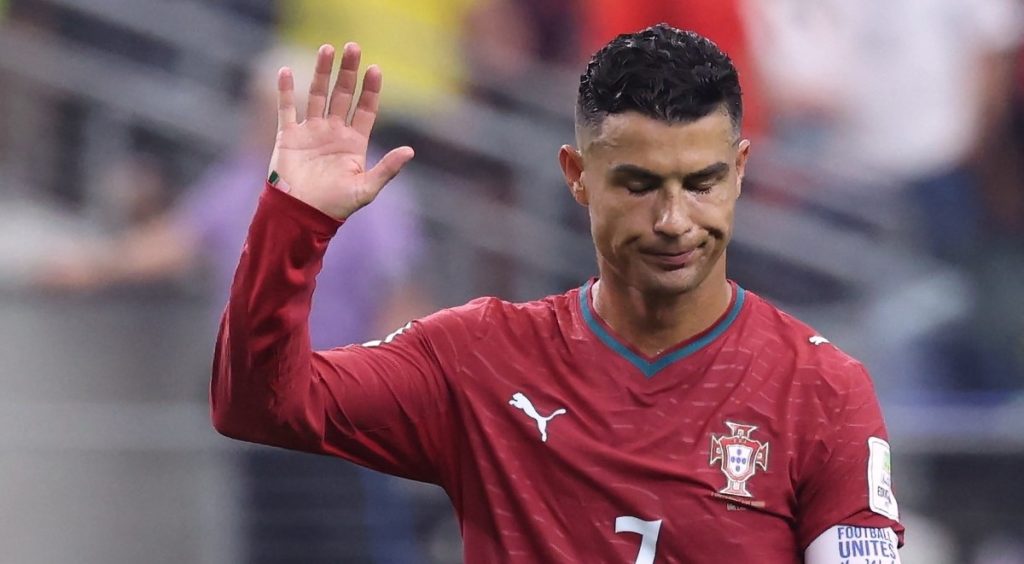
Cristiano Ronaldo has finally handed back Portugal’s famous No 7 shirt, bringing the curtain down on an international career that redefined the limits of individual achievement. After 23 years, 234 appearances and a world-record 146 goals, the five-time Ballon d’Or winner leaves behind a legacy that extends far beyond numbers.
At 41, Ronaldo’s announcement on Thursday marked the end of one of the most remarkable journeys in football. His career with Portugal began in August 2003, when a promising teenager from Madeira made his senior debut. He departs as his country’s most celebrated footballer, a record-breaking captain and a global sporting icon.
Few players have combined longevity, ambition, and an extraordinary appetite for goals quite like Ronaldo. His international tally is unmatched in the men’s game, while his six World Cup appearances and goals at all six tournaments underline a consistency that has spanned generations.
Yet his story was never simply about scoring goals. It was about transforming Portugal’s expectations and carrying a nation’s hope through triumphs, disappointments, and moments of extraordinary drama.
Ronaldo first announced himself on the international stage at Euro 2004, scoring twice as Portugal reached the final on home soil. The hosts, however, suffered a shock defeat to Greece, leaving the young forward with his first major international disappointment.
Two years later, he helped Portugal reach the semi-finals of the 2006 World Cup in Germany. The team fell to France, but Ronaldo had already established himself as one of the most exciting players in world football. The years that followed brought more individual milestones, although the ultimate international prize remained elusive.
The defining breakthrough arrived at Euro 2016. Ronaldo captained Portugal to their first major international trophy, overcoming France in the final in Paris. Forced off through injury in the first half, he continued to encourage his team-mates from the touchline as they fought through extra-time.
Eder’s decisive goal secured a historic 1-0 victory and finally gave Ronaldo the major title that had long eluded him.
That triumph changed the narrative around Portugal’s golden generation. Ronaldo had become the leader of a team capable of winning on the biggest stage, rather than simply its most prolific scorer.
He continued to deliver in the years that followed. A hat-trick against Switzerland in the 2019 UEFA Nations League semi-final helped Portugal reach the final, where they defeated the Netherlands to claim the inaugural title.
In 2025, Ronaldo again lifted the Nations League trophy, adding another international honour to his collection.
His individual records continued to grow. He became the first man to reach 100 international goals and later surpassed Iran’s Ali Daei’s long-standing record to become the highest scorer in men’s international football.
His 200th appearance for Portugal in 2023 was another landmark, while his remarkable scoring run continued into his forties.
At the World Cup, too, Ronaldo made history. He became the first player to score at six editions of the tournament, finding the net again at the 2026 finals in North America. His three goals there took his World Cup total to 11. Portugal, however, exited in the last 16 after losing to the eventual winners, Spain.
The tournament proved to be his final World Cup, but his international departure came after a difficult period. A disagreement with head coach Jorge Jesus during the September international window, followed by Ronaldo’s departure from the national team camp, brought unwanted attention to the closing chapter of his Portugal career.
He later apologised and remained available for selection after serving a suspension. His retirement announcement came on Thursday, when he said the time had arrived to pass the No 7 shirt to the next generation.
‘It was not an easy decision, because some decisions are not made with the mind alone – they are also made with the heart,’ Ronaldo said, reflecting on a journey that began more than two decades ago.
The timing may have been complicated, but it does little to diminish his achievements. Ronaldo leaves Portugal having set two world records and won three major international titles while building a legacy few footballers could hope to match. Although he will continue his club career with Al-Nassr, his journey in the national shirt has come to an end.
But where does that place him in football’s greatest-ever conversation? The debate will continue as Diego Maradona, Lionel Messi, Pele, and Johan Cruyff each shaped the game in their own extraordinary ways.
Ronaldo belongs in that company, and his case rests on more than his goals tally: his athleticism, adaptability, relentless pursuit of excellence, and ability to deliver have made him one of the greatest forwards the sport has seen.
His influence also reached beyond the pitch. For millions of supporters, particularly those who grew up watching him, Ronaldo represented the possibility of turning talent into greatness through discipline, determination, and an unwavering belief in oneself.
Records will eventually be broken. New stars will emerge, and Portugal will find another player to wear the famous No 7. But replacing Ronaldo’s contribution will be a different challenge altogether.
Cristiano Ronaldo, the king of goals, may have handed back his shirt, but he will never surrender his place in football’s pantheon.
International records:
*World’s all-time leading goalscorer in men’s international football (146)
*Most-capped player in men’s international football (234)
*Portugal’s all-time leading assister (46)
*Most UEFA European Championship tournaments played (6)
*Most appearances at UEFA European Championship finals (30)
*Most goals in UEFA European Championship history (14)
*Most consecutive European Championship tournaments scored in (5)
*Most hat-tricks in men’s international football history (10)
*Most wins in men’s international football history (143)
*Only player to have played and scored in six different FIFA World Cup tournaments (2006, 2010, 2014, 2018, 2022 and 2026)
*Second-oldest player to score a World Cup hat-trick (33 years and 130 days, against Spain in 2018)
*Portugal’s all-time leading goalscorer at the FIFA World Cup (11)
*Oldest player to score in a FIFA World Cup knockout match (41 years and 147 days)
*First European player to score 100 international goals (2020)
*Only player to score at least three goals at three different European Championships (2012, 2016 and 2020)